
To More Inquiry

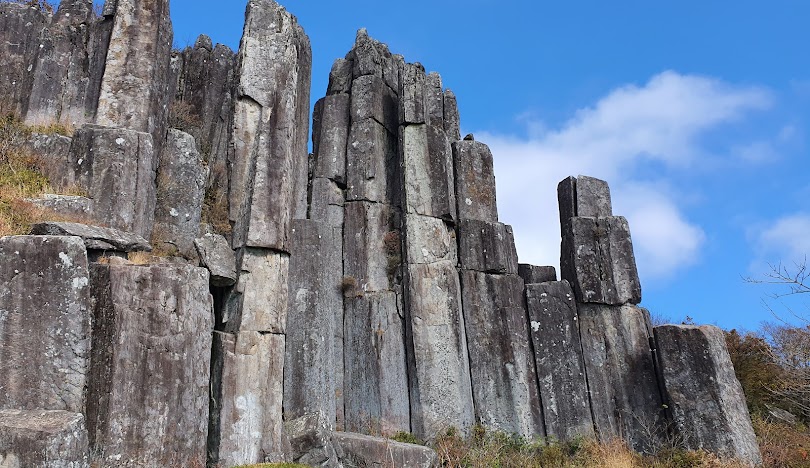
Arrival to Incheon Airport/ Meet and greet by our representative / Transfer to Seoul by private coach. Visit HIKR GROUND ''HiKR Ground'' is a Korean tourism publicity center where visitors can experience K-Pop and view media art at the same time.The name ''HiKR Ground'' embodies the meaning that Korea (KR) will greet ("Hi") global tourists and become a playground. Notably, it provides Korean tourism content in multiple ways for the younger generation to enjoy. Check in hotel, free time Walk at Cheonggyecheon Stream Cheonggyecheon Stream is an 11 km long modern stream that runs through downtown Seoul. Created as part of an urban renewal project, Cheonggyecheon is a restoration of the stream that Was once there before during the Joseon Dynasty (1392-1910). The stream was covered with an elevated highway after the Korean War (1950-1953), as part of the country's post-war economic Development. Then in 2003, the elevated highway was removed to restore the stream to its Present form today. The stream starts from Cheonggye Plaza, a popular cultural arts venue, and passes under a total of 22 bridges before flowing into the Hangang (River), with many attractions Along its length. Free time
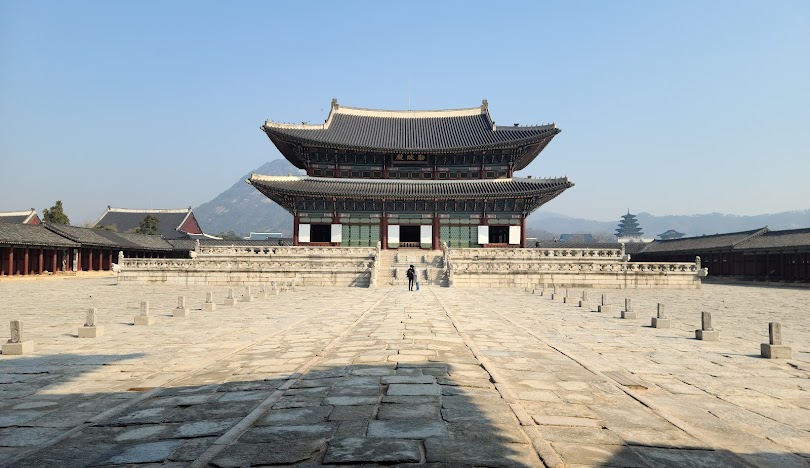
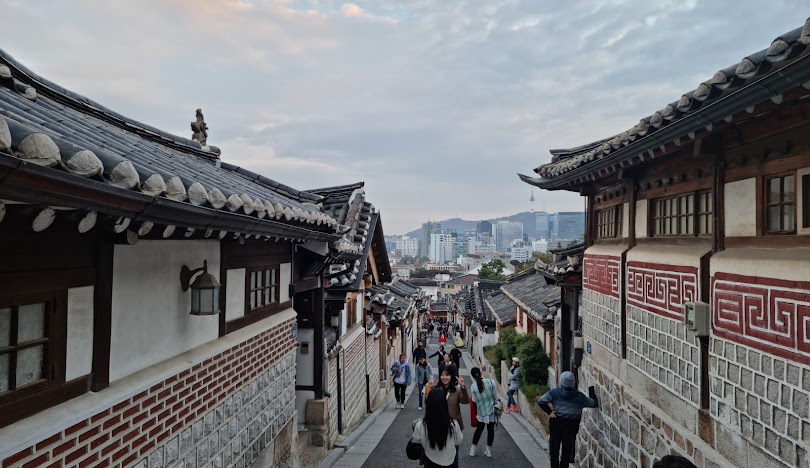
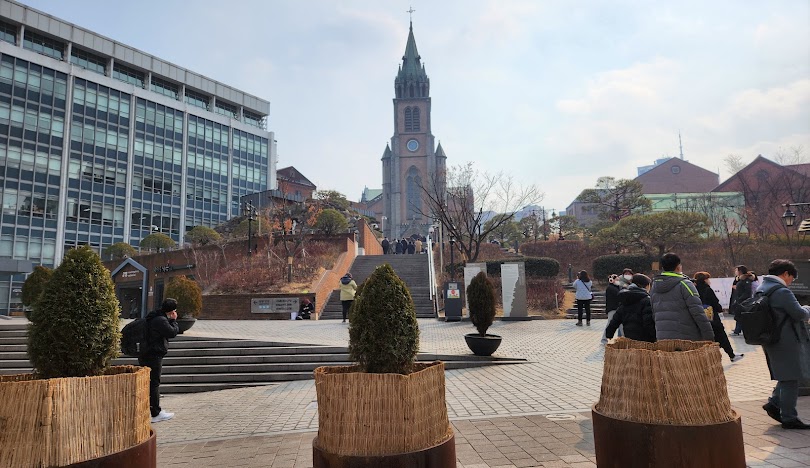
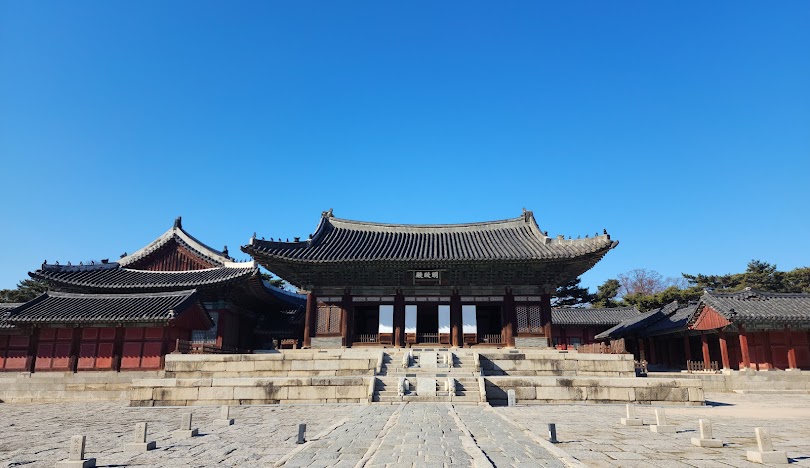
Seoul City Highlight tour in historical center: Gwanghwamun Square stretches out from Gwanghwamun Gate, once the main gate of Gyeongbokgung Palace, to Sejongno Sageori Intersection. Gwanghwamun Square is divided into six sections. At its center stands a statue of King Sejong the Great, the fourth and most respected king of the Joseon Dynasty and creator of Hangeul, Korea's alphabet; and a statue of Admiral Yi Sunshin, a naval commander noted for his victories against the Japanese navy during the Japanese invasions of Korea (1592-1598) and a hero among Koreans. Other attractions include the popular 12.23 Fountain, a sculpture of Haechi (the symbol of Seoul), a flower carpet, and Yeoksamulgil (or the "Waterway of History") on either side of the square. Gyeongbokgung Palace– built in 1395, Gyeongbokgung Palace is also commonly referred to as the Northern Palace because its location is furthest north when compared to the neighboring palaces of Changdeokgung (Eastern Palace) and Gyeonghuigung (Western Palace) Palace. Gyeongbokgung Palace is arguably the most beautiful, and remains the largest of all five palaces. The premises were once destroyed by fire during the Imjin War (Japanese Invasions, 1592-1598). However, all of the palace buildings were later restored under the leadership of Heungseondaewongun during the reign of King Gojong (1852-1919). OPTIONAL: Traditional costume experience – wearing hanbok in the palace. From 20$/PAX Blue House (Presidential Residence).The signature markings of the Presidential Residence of Cheong Wa Dae are its blue tiles.It is the first thing that catches one's attention upon entering the Premises. The blue tiles and the smooth roof blend beautifully with Bugaksan Mountain in the backdrop. Bukchon Hanok Village–Surrounded by Gyeongbokgung Palace, Changdeokgung Palace and Jongmyo Shrine, it is home to hundreds of traditional houses, called hanok, that date back to the Joseon Dynasty. The name Bukchon, which literally translates to "northern village," came about as the neighborhood lies north of two significant Seoul landmarks, Cheonggyecheon Stream and Jongno. Today, many of these hanoks operate as cultural centers, guesthouses, restaurants and tea houses, providing visitors with an opportunity to experience, learn and immerse themselves in traditional Korean culture. As Bukchon Hanok Village is an actual neighborhood with people's homes, visitors are advised to be respectful at all times while looking around. Insadong Antique Alley is “well known as a traditional street to both locals and foreigners” and represents the “culture of the past and the present”. It contains a mixture of historical and modern atmosphere and is a “unique area of Seoul that truly represents the cultural history of the nation.” The area is well known for sightseeing, with approximately 100,000 visitors on Sundays reported in 2000. Insadong is also a visiting spot for foreign dignitaries such as Queen Elizabeth II and the princes of Spain and the Netherlands. It contains 40 percent of the nation’s antique shops and art galleries as well as 90 percent of the traditional stationery shops. Jogyesa Temple is the center of Korean Buddhism. The temple was built in the late 14th century during the Goryeo period and was once turned into ashes due to fire and was rebuilt under the name of Gackhwangsa Temple in 1910 with the effort of many respectful monks, namely Han Yong-un and Lee Hee-gwang. The temple was given a role as the head temple of Korea’s Buddhism and renamed to Tegosa Temple in 1936. In 1954, a purification drive took place to eliminate Japanese influence and revive traditional Buddhism, which established the present day Jogyesa Temple as a result.
Visit to Theme Amusement Park LOTTE WORLD or Visit to Observatory SEOUL SKY in Lotte World Tower (Choose 1) Lotte World is a theme park filled with thrilling rides, an ice rink and different kinds of parades, as well as a folk museum, a lake, accommodations, department stores and more. Lotte World is divided into Lotte World Adventure, a world themed indoor area, and Magic Island theme outdoors, next to Seokchonhosu Lake. Lotte World Adventure is the largest indoor amusement park in the world. The Folk Museum is also one of the most popular museums among international visitors. Also, Lotte World Star Avenue is the perfect place to experience Korean stars and the entertainment world. Lotte World Tower Seoul Sky is located on floors 117-123 of Lotte World Tower, the nation's tallest and the world's fifth tallest building (555 m). The observatory offers a panoramic view of the entire capital city, beautiful both day and night. In addition to the outstanding view, visitors can enjoy a small snack or coffee from the dessert cafe while sitting in the lounge or on the sky terrace. The observation deck has two story-high glass windows for an uninterrupted view. The Sky Deck, located at 478m, hold the Guinness World Record as the highest glass-floored observatory in the world. On days when visibility is limited, visitors can still enjoy a clear sky through the Sky Theater. Walk at Seokchon Lake Seokchon Lake was originally part of the Han River, but following a land reclamation project in 1971, the lake formed. Within Seokchon Lake Park is the West Lake and Magic Island. Magic Island is a man-made island that is connected by monorail to Lotte Adventure. Another exciting attraction of the West Lake is Seoul Norimadang, an outdoor venue for traditional Korean performances, which stages various open-air performances and events at weekends. The East Lake, with picturesque scenery created by the combination of the beautiful lake and the lush park, is famous for its jogging circuits and footpaths. The lakeside area also has a number of amenities including small parks, restaurants and café. Lake is very popular as K-drama shooting site. Free time
Walk at Hallyu K-Star Road Featuring the latest hallyu trend, visitors will be able to discover restaurants and attractions frequented by popular hallyu stars while walking along the Hallyu K-Star Road. It took about two years to establish the K-Star Road. There is a 3-meter-tall PSY GangnamDol in front of the Galleria Department Store, and seventeen more GangnamDols of Super Junior, EXO, Girl’s Generation, and Bangtan Boys are located. The GangnamDols are placed along with about 1 km section of the road connecting the Apgujeong Rodeo Station and Cheongdam crossroads, so if you walk along the GangnamDol places, you can enter the area packed with entertainment companies, including JYP Entertainment and Cube Entertainment. It is another enjoyable content to find your favorite singer’s GangnamDol and take a picture to be posted in your SNS. Transfer to Gangnam district. Many people tend to gather at Gangnam Subway Station, as the location is geographically and commercially suitable as a meeting point for social gatherings, events or personal engagements. Hence, during the weekdays it is usually crowded in the evenings while on weekends, areas around Gangnam Subway Station exit number 10 and 11, as well as City Theatre, and Giordano are often bustling with people. Visitors travel to Gangnam to take advantage of its convenient transportation, fashion malls, movie theatres and bookstores. COEX Mall & Stafield Library is the biggest convention center and exhibition space in Korea. Directly connected to the Samseong Station of subway line 2, it includes a shopping center, A movie theater, a musical concert hall, exhibition halls and famous restaurants. Nearby for visitors’ perfect shopping, dining And culture life. COEX MALL has been reopening in 2014. The mall includes Mega-Box Theater, COEX Aquarium, Star field Library, YP bookstore, Pierrot shopping and many other Shops and restaurants. Transfer to Gwangjang Market (Foodie Tour) is one of the largest traditional markets in Korea and was even featured on Netflix’s Chef’s Table. If you’re in the city for any amount of time and looking for one of the best places to eat in Seoul, this is a must visit. It’s a well-known market for fabric and Hanboks, but it’s also known for Korean Street Food and it’s not just visited by tourists, but locals frequent Gwangjang Market. Gwangjang Traditional Market is one of my top recommendations for tourists. Transfer to shopping centerMyeongdong. STREET FOOD EXPERIENCE Myeongdong is Seoul’s shopping mecca and is a must-see for tourists, but it is not just a shopping destination; Myeongdong is also a hub of commerce, banking and culture with a daytime population of 1.5-2 million. For shoppers there is a mixture of street stalls and retail outlets selling everything from high fashion to casual attire, as well as many Korean cosmetics stores offering high-quality products at competitive prices. OPTION 1: Enjoy non-verbal show NANTA OR THE PAINTER SHOW «Nanta» -is one of Korea's top performances, a show about four chefs who must prepare a wedding banquet in just one hour. The plot is depicted through various genres of performances, including percussion that uses kitchen utensils to make beats based on traditional rhythms of samulnori (traditional Korean percussion quartet). The entire show has no spoken dialogue, yet plenty of Comedy and romance, too. Since its debut in October 1997, NANTA (also known as Cookin') has earned International acclaim, having been performed on Broadway and at other famous venues worldwide. Free time OPTION (2):“THE PAINTERS” is a one-of-a-kind show that encompasses interpretive urban dances, witty performances, and the showcasing the creation of a painting with a charming twist. A PAINTER are an art performance that fills you with fun and passion with a dramatic flair that you won’t be able to find anywhere else. (You can choose one of the Performance Show Nanta or The Painter show)
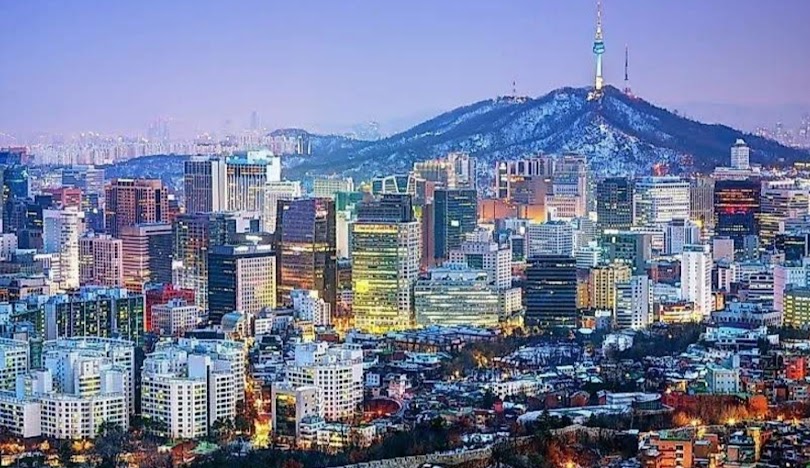
Visit to Namsangol Hanok Village Namsangol Hanok Village opened in 1998 on the north side of Namsan Mountain in the center of the capital. This village has five restored traditional Korean houses, a pavilion, traditional garden, performance arts stage and a time capsule plaza, making it a perfect spot for both locals and tourists to take a leisure walk. A time capsule commemorating Seoul’s 600 Year Anniversary was buried in 1994 at the highest point of the village and is scheduled tobe reopened four hundred years later in 2394. Walk at N SEOUL TOWER -Drama shooting sites( Excluding Observatory Desk visit) Namsan Park is the largest park in Seoul and is home to many species of trees, plants, and animals. The parkis well-known for its beautiful walking trails which allow visitors to see the local wildlife, such as its squirrels.The park covers a large area and features a number of tourist attractions including Baekbeom Square, the Namsan Cable Car and Namsan Seoul Tower, and statues of famous figures in Korean history. A number of events take place at the park and one of the biggest is the annual cherry blossom festival in April. The Cherry Blossom Path in Namsan Park is the longest trail of cherry trees anywhere in the city and is spectacular in full bloom. Walk at Hongdae district. Hongdae is a neighborhood known for its youthful and romantic ambience, Underground culture and freedom of self-expression. Unique cafes, cozy galleries, accessory stores, fashion shops, live cafés and clubs, art markets, and gourmet eateries make this a popular hang-out for local youth and a fascinating place to walk Free time
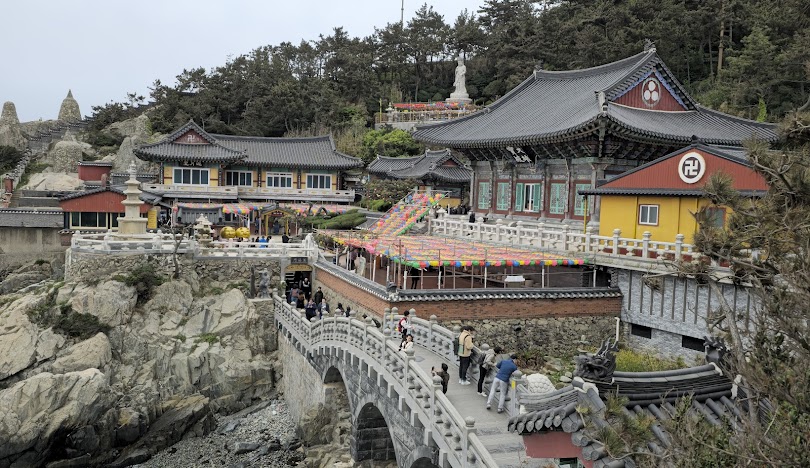
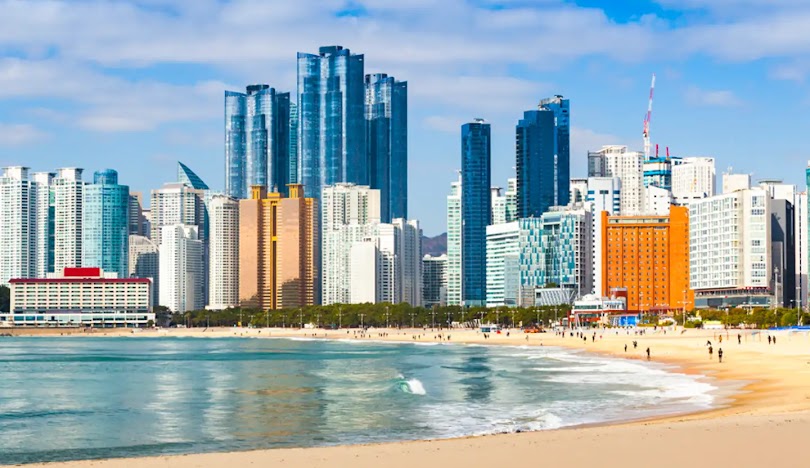
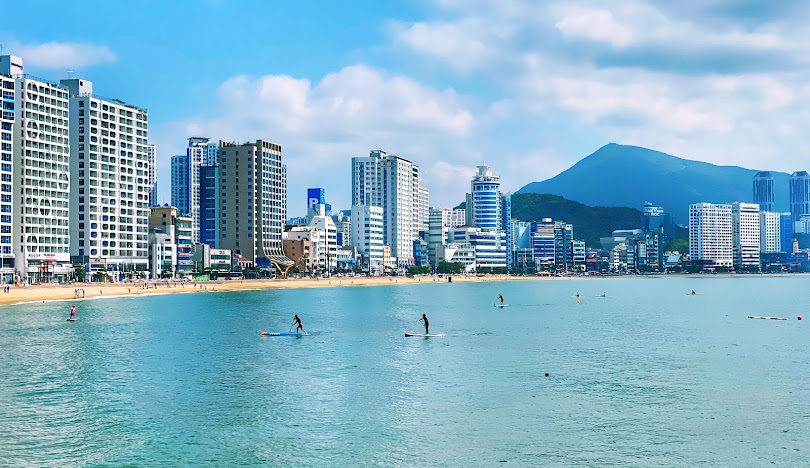
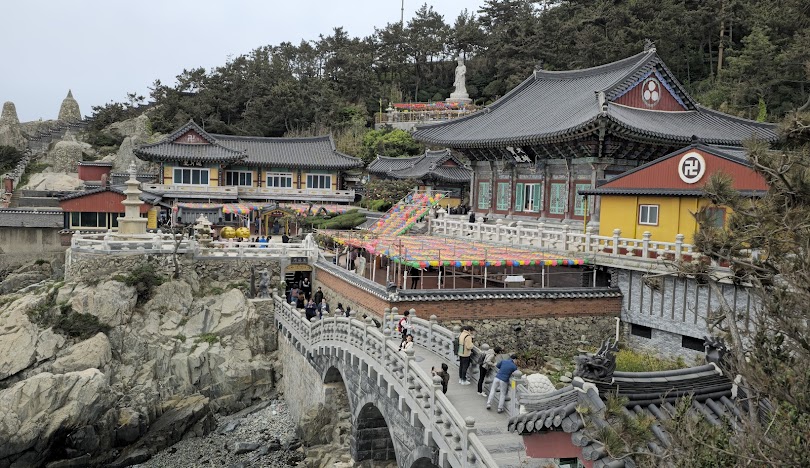
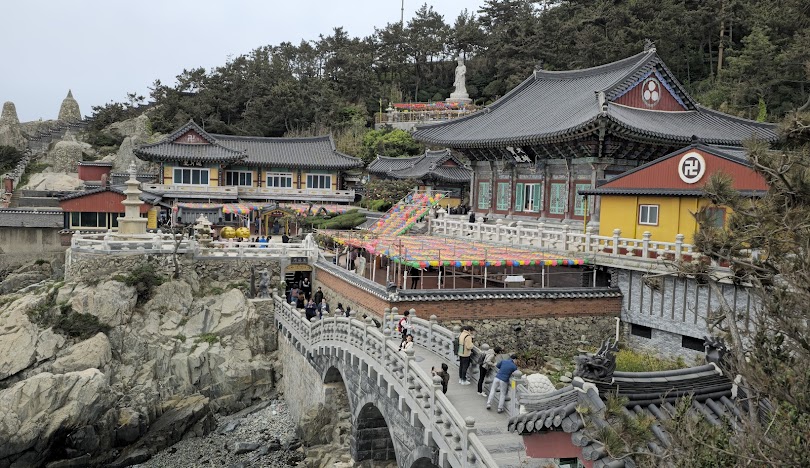
Hotel check out and Transfer to Busan by KTX or Coach Busan Tour: Haedong Yonggungsa Temple is situated on the coast of the north-eastern portion of Busan. This superb attraction offers visitors the rare find of a temple along the shore line; most temples in Korea are located in the mountains. Haedong Yonggungsa Temple was first built in 1376 by the great Buddhist teacher known as Naong during the Goryeo Dynasty. One of the special sites at the temple are the 108 stairs and stone lanterns lining the rocky landscape. After going down the 108 steps, one will be delighted with the beauty of the temple. Midway down the 108 steps one can stop and enjoy the calming sounds of the waves, and view the majestic sunrise. Haeundae Beach is the most famous beach in Busan. The white sand beach is roughly 1.5 k m long, over a 30-50 m wide area, creating a beautiful coastline before a shallow bay, making Haeundae Beach perfect for swimming. Haeundae Beach is also famous for various cultural events and festivals held throughout the year. Other facilities in the area include Dongbaek Island, Busan Aquarium, a yachting dock, BEXCO, driving courses and more. Gwangan Bridge stretches over 7.4km from Namcheon-dong (Suyeong-gu, Busan) to Centum City (U-dong, Haeundae-gu). It is the longest bi-level bridge over the ocean in Korea. In addition to providing a quick way to get around, the bridge offers breathtaking views of nearby attractions, including the endlessly unfolding ocean, Oryukdo Island, Hwangnyeongsan Mountain, Gwangalli Beach, Dongbaekseom Island, and Dalmaji Hill. Equipped with thousands of LED lights, the bridge showcases a beautiful lighting exhibition at night that changes with the seasons. Check in hotel, free time
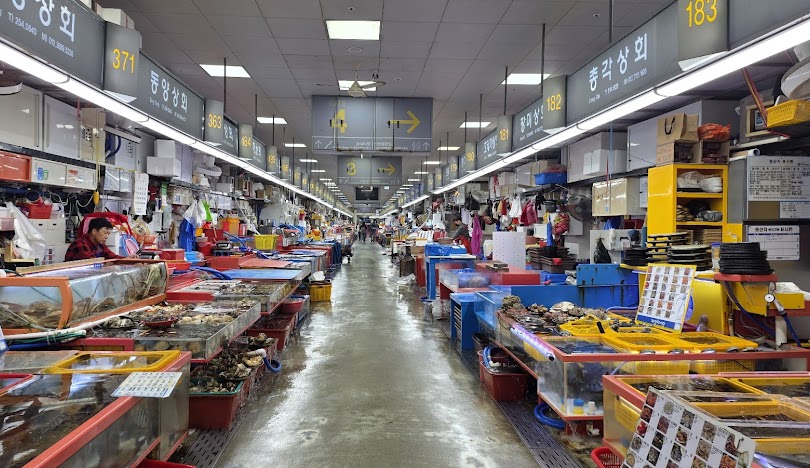
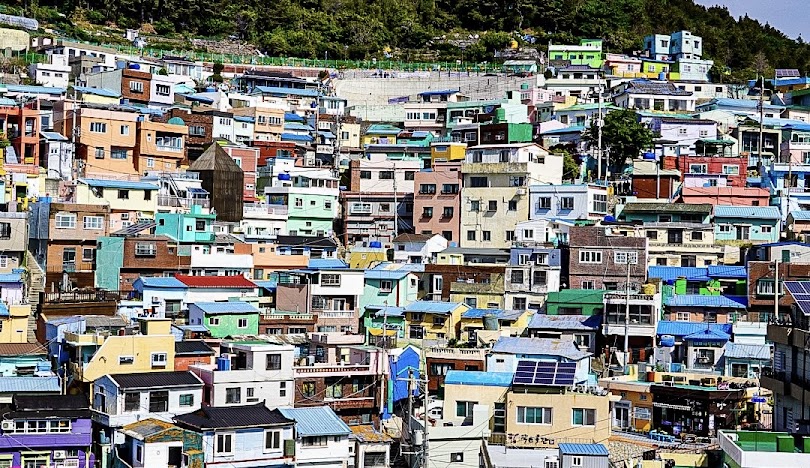
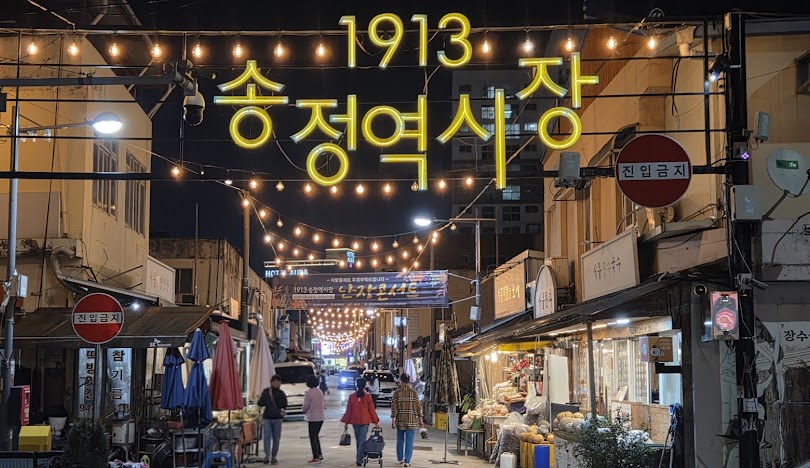
Hotel check-Out Busan Tour: Gamcheon Culture Village is formed by houses built in staircase-fashion on the foothills of a coastal mountain, earning this village the nickname "Machu Picchu of Busan." Many alleys that cut through this community are vibrantly decorated with murals and sculptures created by the residents. Jagalchi Market is Korea's largest seafood market, selling both live and dried fish. Most of the people who sell fish are women, so the vendors here are called Jagalchi Ajumma, "ajumma" meaning middle- aged or married woman in Korean. This market represents Busan and is famous throughout the country. Visitors can eat fresh raw fish right at the market. Even nowadays visitors can see women selling mackerel, sea squirts (ascidians) and whale meat on wooden boxes along the road outside of the market and along the shore. Transfer to Suncheon. Visit to Suncheonman Bay National Garden. The Suncheon Bay Garden was established in order to turn 1.12 square kilometers wide natural habitat into a conservation area, where it serves as a home over 505 species of trees and 113 species of flowers. The numerous groups of tulips and royal azaleas are truly a sight to see. In addition, the nearby 30,000 square meter field& of canola flowers is in full bloom in May, which creates a beautiful yellow "wave" of color and trees make a great shades of canopy for the area. Transfer to Gwangju, hotel check in, free time
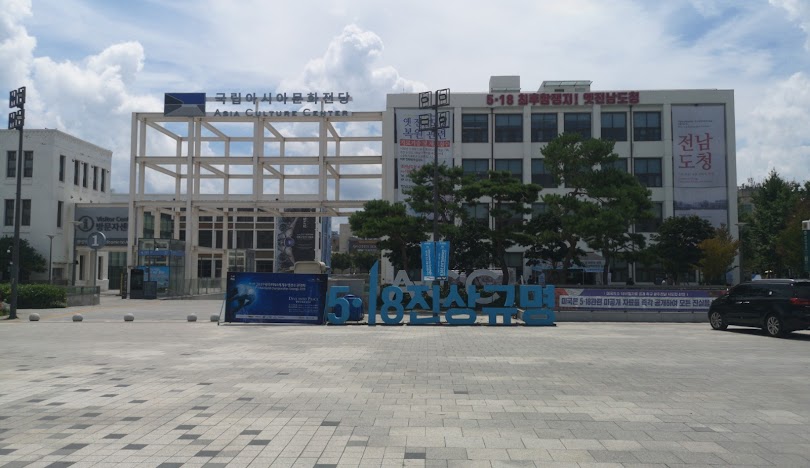
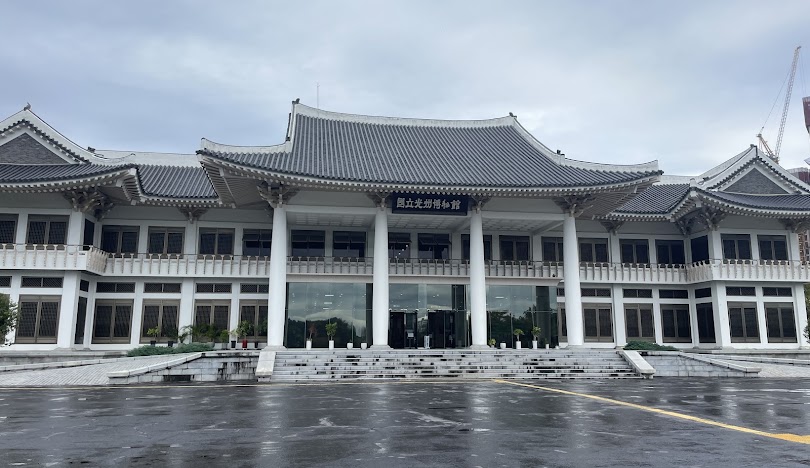
Hotel check out Gwangju Tour: Visit to Penguin Village “We put various odds and ends together and something special emerged.” Villagechief Kim Donggyun and other locals retrieved discarded items that they decided to use to adorn the walls in the neighborhood. Hundreds of household items and toys as well as old broken clocks were put on display, turning ordinary alleys into a work of art and attracting increasing crowds. Its name was given by Kim, who was inspired by a friend whose manner of walking he affectionately likened to that of a penguin. Visit to Yangnim History & Culture Village Yangnim History & Culture Village is located in the area where Western items and ideas first entered Gwangju over 100 years ago. As such, the neighborhood has a unique collection of Western architecture mixed with traditional hanok houses. There are also many houses of Christian missionaries, who facilitated the advancement of medicine and education in Gwangju. Some areas such as Penguin Village have been decorated with murals and outdoor exhibitions to promote art and tourism, helping the elderly locals to make a living. K-pop DANCE Experience (Subject to arrangement) Headquarters of Joy Dance Plugin Music Academy is located in Gwangju. Academy, which is official partner of YG Entertainment, helped to shine to such a stars as BTS J-Hope, Winner Kim Jin Woo, Monster C IM, Minhyuk, Hyunwon, Kara Goo Hara, and others. K-pop stars develop here not only their dancing abilities, but also vocal and othe talants. By visiting this Academy and taking master-classes here, tourists can feel dreams and all the hard work their beloved idols have felt here. Visit to Traditional Culture Center. Traditional music instruments experience – playing on janggu. TheTraditional Culture Center is located near the entrance of Jeungsimsa Temple. A walk down the steps reveals the center’s impressive size as well as its beautiful design. At the Traditional Culture Center, masters who have been designated as intangible cultural properties teach the public about traditional culture: pansori (traditional Korean folk opera); gobeop (traditional drumming technique); gayageum (traditional Korean zither); and the table setting for pyebaek, part of the traditional ceremony. Performances are also held to demonstrate such elements of traditional Korean art and culture. Free time at Chungjang-ro Fashion Street Chungjang-ro Street is Gwangju’s vibrant center of fashion, where the latest trends can be identified with one look at the styles of passersby. A line of large-scale fashion malls, individual clothing stores and accessory shops stretch from Chungjang-ro 1-ga to 3-ga, offering everything from high-end brands tounique, one-off items. Running between Chungjang ro 4-ga and 5-ga avenues is Hanbok Street, where clusters of hanbok shops sell a variety of the traditional Korean costume. Transfer to Seoul / Check in Hotel (Free at own leisure)
Free at own leisure day
Hotel check-Out Transfer to Incheon International Airport. Departure from Korea
Reserve your ideal trip early for a hassle-free trip; secure comfort and convenience!
To receive our best monthly deals





Leave a comment: